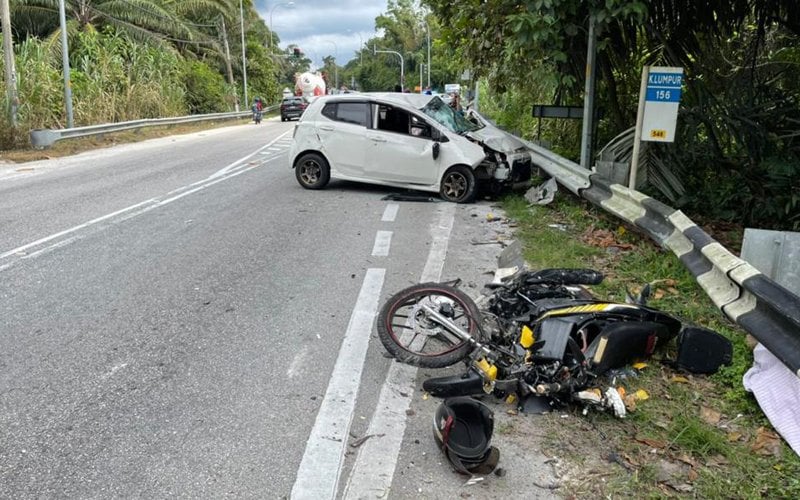
If you ride a motorcycle in Malaysia, you probably don’t need statistics to tell you this:
the road can feel hostile.
It starts small. A horn that’s too long. A car that inches closer than it should. A driver who takes lane filtering personally. Most days, we shrug it off and ride on.
But sometimes, that tension explodes — and when it does, motorcyclists almost always pay the highest price.
I remember watching the Johor Bahru video late at night. A Toyota Alphard MPV, a motorcycle, a roadside argument — nothing unusual at first. Then everything went wrong.
The MPV rammed the bike. The rider fell. His wife ran toward the car. Instead of stopping, the driver reversed — dragging her along the road before crashing into a drain.
I didn’t know the couple. But I felt it in my chest.
Because that could’ve been any of us. A normal ride. A normal argument. A moment where anger turned a vehicle into a weapon.
If you’ve been riding long enough, you’ve heard the other stories.
Some of these didn’t make national headlines. Some never made the news at all. But riders remember them — because they reinforce a quiet fear we carry on every ride.
When things turn ugly, we don’t have metal around us.
On a motorcycle, you feel everything — the road surface, the heat, the mood of traffic.
But when road rage enters the picture, one thing becomes painfully clear:
we are always at a disadvantage.
A car doesn’t need to hit you to scare you.
It just needs to:
In the Johor Bahru case, the imbalance was deadly obvious. A large MPV versus a motorcycle. One wrong decision, and lives were almost lost.
Most road rage cases don’t start with violence. They start with bruised egos.
Lane filtering. A late brake. A horn that sounds sarcastic. A glance that feels challenging.
In cities like Kuala Lumpur, Johor Bahru, and Penang, traffic pressure is relentless. Long work hours. Heat. Fatigue. When stress builds up, motorcyclists — visible, exposed, and easy to blame — become convenient targets.
I’ve lost count of how many times I’ve been shouted at for simply doing what bikes are designed to do: move through traffic.
After the Johor Bahru incident, police reminded the public that using a vehicle aggressively can lead to serious criminal charges — not just traffic fines.
The Royal Malaysia Police has made it clear before:
a car used in anger can legally be considered a weapon.
But here’s the sad part:
Most people only realise this after someone is hurt.
Every experienced rider I know shares the same advice — advice learned from close calls, not textbooks.
Don’t argue.
Don’t chase.
Don’t “win”.
Ride away. Find people. Find light. Let your camera record what your fists shouldn’t.
In the Johor Bahru case, it wasn’t confrontation that brought justice — it was video evidence and restraint after the fact.
On a motorcycle, survival always beats pride.
Road rage isn’t a motorcycle problem. It’s a road culture problem.
It’s about forgetting that:
Motorcycles aren’t obstacles. They’re people — exposed, human, and trying to get home like everyone else.
When we ride, we trust strangers not to lose control of their emotions.
Most of the time, that trust holds.
Sometimes, it doesn’t.
The Johor Bahru case, and many others like it, remind us how thin the line is between inconvenience and tragedy.
So if you ride: protect yourself first.
If you drive: remember your power.
Because no moment of anger is worth turning a road into a crime scene.